
Blog
Linearity, Co-linearity, Robustness, Ruggedness and Stability in qPCR and dPCR Validation
Sensitivity and Specificity in Regulated Bioanalytical Assay Validation
Precision and Accuracy in qPCR and dPCR Assay Validation

Immune Monitoring for Vaccine Development Using Illumina SomaSeq Discovery
Development, Qualification, or Validation?

Chain of Custody in Regulated Bioanalysis: Protecting Every Sample, Every Record, Every Result
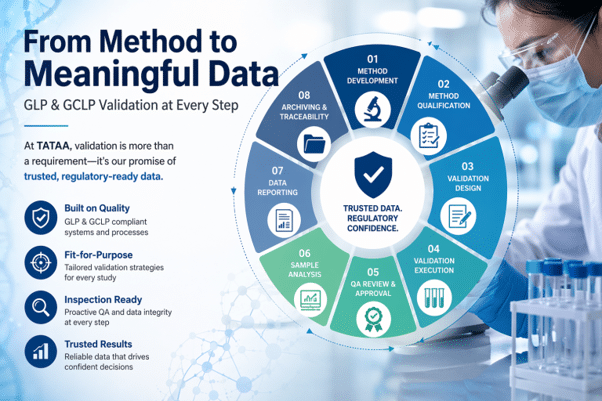
GLP & GCLP Molecular Bioanalysis: Validating qPCR, dPCR and RNA-Seq for Preclinical and Clinical Studies

Two-Tailed PCR: The Precision Tool RNA Medicine Has Been Waiting For
Keeping longitudinal clinical trials on track: How we approached inter-batch variability in the Olink Target 48 Cytokine panel
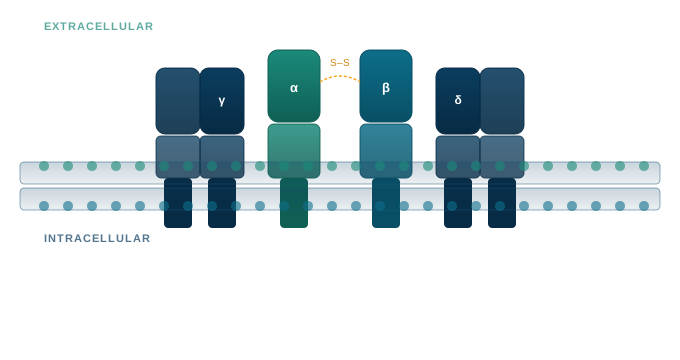
TCR Sequencing: Decoding the Immune Response Across Vaccines, Cancer Immunotherapy, and Disease

Genomic biomarkers

qPCR, dPCR, and NGS for siRNA bioanalysis

Precision bioanalysis for advanced therapies

TCR/BCR sequencing and dPCR for CAR-T safety monitoring

RNA extraction from PAXgene tubes

Replication competent lentivirus testing

IncRNA: From junk to a therapeutic goldmine

Viral Vector Characterization and Integrity Testing

Vector Copy Number Analysis

qPCR Primer Design

CAR-T safety monitoring
Integrating viral vector-based cell and gene therapies carry a potential risk of secondary cancers, prompting the FDA to require 15 years of post-marketing follow-up for CAR-T therapies.

PAXgene RNA extraction
TATAA Biocenter’s optimized protocol enables high-quality RNA extraction from PAXgene® blood RNA tubes, delivering improved RNA integrity and yield for both clinical and preclinical applications.

Guide to PCR in drug development
A comprehensive guide to qPCR, dPCR, and Two-Tailed PCR for regulated and exploratory applications in drug development.

Vector copy number analysis in CAR-T development
Precise VCN quantification in CAR-T therapy, enabling safe dosing, persistence monitoring, and regulatory compliance.

siRNA bioanalysis with qPCR, dPCR, and NGS
Sensitive and precise siRNA bioanalysis with qPCR, dPCR, NGS, and Two-Tailed PCR technology.

GLP-1 receptor agonists therapeutics
Mechanisms, therapeutic applications, and future directions in precision medicine for GLP-1 receptor agonists.

Overview of bioanalysis in advanced therapies
- Assay design and validation
- Regulatory guidelines (EMA and FDA)
- Challenges and best practices

Genomic biomarker analysis (DNA, RNA, miRNA, ctDNA etc,)
- Technology overview
- Analytical validation
- Regulatory overview

TATAA capabilities brochure
Download our latest brochure for an overview of our molecular CRO expertise in CGT bioanalysis, biomarker analysis, and assay development.